
Three meanings of reuse
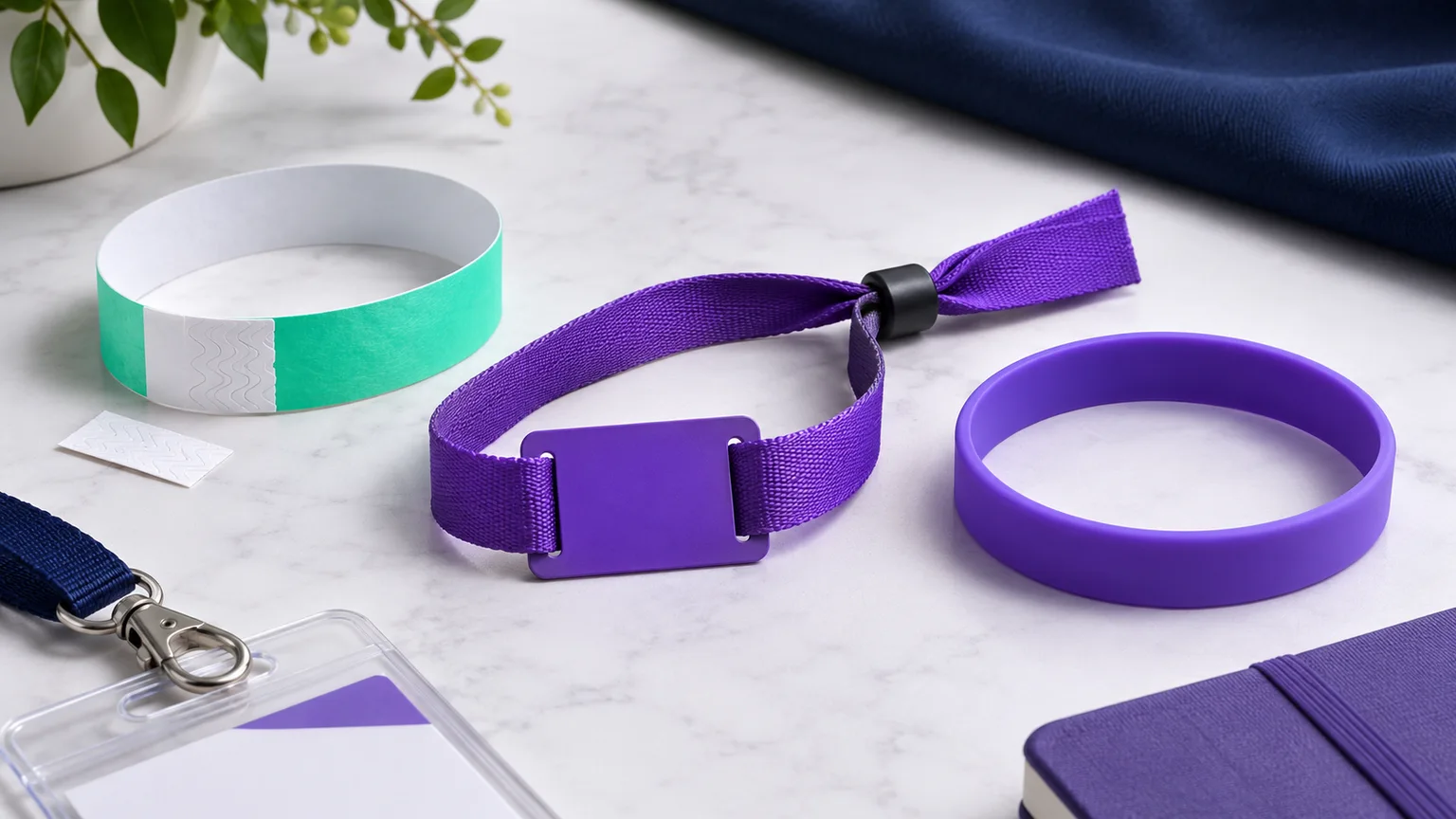
Physical reuse means the strap, closure and electronics can survive removal and another wearing cycle. A continuous elastic or silicone loop can often be removed without opening a fastener. A one-way fabric slider or destructive adhesive closure is intended to resist that kind of removal.
Electronic reuse means the tag can still communicate and the permitted data can be used again. Some memory can be writable; some identifiers or locked areas cannot be changed. A functioning chip may remain inside a strap that is no longer suitable to wear.
Operational reuse means the venue can revoke the previous entitlement, inspect and clean the band, then issue it correctly to another person. The software may retain the same tag identifier while associating it with a new account. That requires an authorized workflow, not merely a phone scan.
Compare complete structures
| Format | Removal and fitting | What reuse depends on |
|---|---|---|
| Adhesive disposable | Overlap intended for one issue; removal can damage closure | Replacement is normally expected rather than re-closing the same adhesive |
| Fabric with one-way slider | Adjusted during fitting; removal policy depends on slider construction | A readable tag does not restore a cut strap or defeated lock |
| Elastic loop | Stretches over the hand with no conventional closure | Size retention, seams, electronics pocket, cleaning and credential reset |
| Silicone loop | Removable continuous or product-specific fitting | Surface condition, encapsulation, fit, cleaning and authorized reissue |
A fabric band can be worn for a multi-day event and still be single-use. Wearing duration and reuse are separate dimensions. Likewise, a removable silicone band may be issued to one guest for an entire stay rather than reused between guests immediately.
When single-use makes sense
At an event, a one-way closure can support a policy that the credential remains attached to the issued wearer. Staff can also recognize printed dates or access groups. Electronic permissions still belong to the admission system.
Single-use stock avoids a collection-and-cleaning operation after every visit. It also creates a replacement requirement and waste stream. Consider how lost or damaged bands will be handled and how the old credential will be invalidated when a replacement is issued.
A destructive closure is not a guarantee against every transfer attempt. Fit, staff checks and reader rules remain relevant. The events and festivals guide connects those choices to re-entry and attendee groups.
When reusable structures help
Hotels, leisure venues and membership facilities may prefer removable credentials that can be collected or retained by the user. A reusable structure can suit repeated visits, but the fitting needs to work for the intended wrists and hands.
Silicone RFID wristbands offer a molded wearable surface. Elastic loops provide a different feel and stretch fit. Neither material name establishes a cleaning method, service-life count or universal reader compatibility.
For reissue, agree the cleaning products and process with the finished-product guidance. Inspect the band for cracks, damaged seams, loose pockets, loss of elasticity or visible enclosure failure. If the intended use includes swimming, water exposure needs its own assessment.
Resetting a credential is a system task
Removing yesterday’s wristband does not remove yesterday’s permissions. The operator must deactivate or reassign its account using the authorized application. Depending on the system, data may also need to be written or re-provisioned on the tag.
NXP’s NTAG family illustrates the distinction between writable user memory and permanent or locked areas. That does not mean every installed credential uses NTAG or can be safely rewritten with a general phone app. Protected applications can require keys and specific provisioning tools.
Do not erase or format an issued band to “reset” it. You could remove data needed by the operator without changing the corresponding account. Read how RFID wristbands work for the separation between tag data and software decisions.
Compare the cost per completed use
Purchase price is only part of the operating cost. Reusable operation can add collection, sorting, cleaning, inspection, re-provisioning, storage and replacement work. Lost bands may never return. A single-use system has recurring band cost and disposal but a different handling process.
Compare the expected number of successful reissues rather than an unsupported lifetime claim. A higher unit price can make sense if recovery is reliable; the same calculation changes when many visitors keep their bands as souvenirs.
For either approach, artwork, variable numbering, tag construction and chip configuration affect cost. No universal break-even quantity applies across venues. A simple operating estimate should include actual staffing and loss assumptions.
Environmental claims need the whole system
Using a product repeatedly can reduce the number of bands purchased, but “reusable” does not by itself establish a lower environmental impact. Washing, transport, loss, material and end-of-life handling all matter.
Similarly, disposable does not mean recyclable in every local stream. A mixed assembly of substrate, adhesive, antenna and IC can be difficult to separate. Avoid treating a raw material’s recycling statement as a finished RFID band’s disposal instruction.
A practical selection sequence
- Decide whether the band must remain attached to one wearer or be removable.
- Set the wearing period separately from the number of intended reissues.
- Choose a comfortable material and fit for that policy.
- Confirm the tag and authorized system’s issue, revoke and reassign process.
- Plan cleaning, inspection, losses and replacement before comparing total cost.
Can I keep using last year’s festival band?
The electronics may still respond, but only the organizer can authorize it for another event. A previous ticket association, a cut strap or a defeated closure can make it unsuitable even if a phone detects the chip.
Can a single-use band have a rewritable chip?
Yes. Single-use describes the intended physical issue or closure. It does not require all chip memory to be read-only. Rewritable electronics do not make a damaged adhesive closure reusable.
Sources & scope
Reuse is considered at three levels: wearable construction, tag data and the operator’s credential workflow.
- NXP: NTAG213/215/216 data sheet
- Nordic Wristbands: disposable and reusable product constructions
- Wristbands.com: silicone RFID product applications
References checked November 5, 2026.