

An RFID wristband can provide a wearable credential that guests keep with them while using compatible hotel facilities. Depending on the access-control and property-management systems in place, it may be used for room access, pool entry, spa facilities, lockers, or guest-account identification.
The important distinction is that the wristband is not the hotel management system. It stores or presents a credential. Readers, door locks, access controllers, point-of-sale terminals, and backend software determine what that credential is allowed to do.
For hotel procurement teams, the right choice therefore starts with system compatibility and operating requirements—not simply color or material. This guide explains how to evaluate applications, chip and reader compatibility, wristband materials, credential management, and sample testing before placing a bulk order.
What Does an RFID Wristband Do in a Hotel?
An RFID wristband contains an RFID chip connected to an antenna. When the wristband is presented within the operating range of a compatible reader, the reader can obtain the credential data needed by the connected system.
A typical deployment may include several components:
| Component | Role in the system |
|---|---|
| RFID wristband | Carries or presents the guest credential |
| RFID reader | Reads the credential from the wristband |
| Door lock or access controller | Applies the access rules configured for a door or area |
| Hotel management or credential system | Associates credentials with guests, rooms, dates, and permissions |
| POS or account platform | Connects a credential to a guest account or transaction workflow |
The exact architecture varies by hotel and technology provider. In some systems, access decisions are checked online against a central platform. In others, door locks store credential permissions locally and receive updates through a separate process.
This is why a wristband should never be selected by chip name alone. The complete credential format and the hotel’s reader and software environment must work together.
For a general introduction to the technology, see BandWove’s guide to how RFID wristbands work.
Where Can Hotels and Resorts Use RFID Wristbands?
A hotel may use one wearable credential across several guest touchpoints, but each application needs to be checked against the relevant equipment and software.
Guest room access
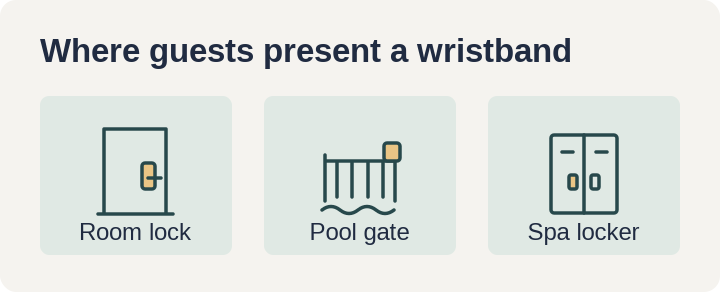
Room access is one of the most visible uses. After check-in, the hotel’s credential system can associate a wristband with a guest and the room or rooms they are authorized to enter. At a compatible lock, the guest presents the wristband to the reader and the system checks the credential against its access rules.
The convenience is especially relevant at resorts where guests move between rooms, pools, restaurants, and outdoor facilities. A wearable credential can be easier to carry than a separate key card when guests are not wearing clothing with pockets.
Before choosing a wristband, confirm the lock manufacturer, lock model, supported credential technology, encoding process, and any required security configuration. A wristband that works with one hotel lock system may not work with another.
Swimming pools, beaches, and water facilities
Pools, private beaches, and water attractions may use access points to distinguish hotel guests, day visitors, members, or guests with particular package entitlements.
An RFID wristband can act as the credential presented at a compatible gate or reader. The access rules—such as which area a guest can enter and during what period—are normally managed by the connected system.
For wet environments, evaluate the finished wristband rather than relying on the material name alone. The chip, antenna, encapsulation, seams, closure, and overall construction all affect how the product performs during repeated exposure to water, sunscreen, cleaning products, and normal wear.
Spa, fitness areas, and electronic lockers
Spas, gyms, changing rooms, and electronic lockers are other possible use cases. Guests may prefer not to carry a room card or phone while exercising or using wet facilities.
A wristband can be used as an access credential or locker identifier when the equipment supports the selected technology. However, a hotel should not assume that a wristband accepted by its room locks will automatically work with a separate locker system. The reader technology and credential configuration may be different.
Restaurants, bars, and guest accounts
In some resort environments, a wristband is used to identify a guest account at a restaurant, bar, or point-of-sale terminal. Staff may scan the credential and associate a purchase with the guest’s room account, prepaid balance, or another payment workflow.
The wristband itself does not process a bank-card payment. The POS platform and hotel account system handle the transaction, balance, and settlement rules. The wristband is the identifier that connects the guest to the relevant account.
This distinction matters when defining a project. If the requirement is simply access control, a payment integration may be unnecessary. If the hotel wants room-charge or cashless functionality, the POS provider must be involved before the wristband specification is finalized.
Guest categories and package entitlements
Resorts may need to distinguish standard guests, premium guests, day visitors, children, members, and staff. A wristband can provide an electronic credential for the relevant access rules, while colors or printed markings can help staff make a quick visual distinction.
Visual color coding should be treated as an operational aid, not as the security control itself. Restricted areas should rely on the electronic authorization rules configured in the access system.
Can One Wristband Work Across Multiple Hotel Systems?
It can, but only when the systems are designed or configured to accept a common credential.
Different devices may use different:
- RF technologies and communication protocols
- Chip families and credential formats
- Authentication or encryption methods
- Key-management arrangements
- Encoding tools and issuing procedures
- Software interfaces and account structures
For example, a hotel’s room locks may use a credential format managed by the lock vendor, while its gym lockers use a separate reader and management platform. Even if both devices operate at 13.56 MHz, they may not accept the same wristband credential.
The hotel’s IT team or system integrator should map every device that needs to read the wristband.
| System | Information to confirm |
|---|---|
| Room door locks | Manufacturer, model, supported chip or card technology, credential format |
| Pool or spa gates | Reader model, access rules, and credential interface |
| Electronic lockers | Supported tag technology and enrollment method |
| Elevators or restricted floors | Reader type and permission-management process |
| POS terminals | How a wristband credential is linked to a guest account |
| Hotel software | Supported integrations, credential issuing, and data synchronization |
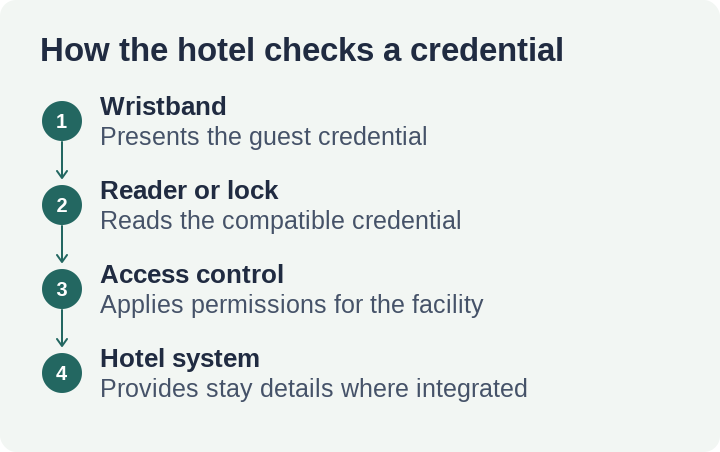
A useful workflow diagram should show the wristband, reader, access-control platform, and relevant hotel system as separate components. It helps prevent the common mistake of treating the wristband as if it independently controls every facility.
For projects involving a change in credential technology, review the reader and credential requirements before choosing a chip. BandWove’s article on MIFARE Classic and DESFire EV3 reader compatibility may also help frame the questions to ask the system provider.
How to Choose the Right RFID Technology
The first step is to obtain the technical requirements from the hotel’s lock or access-control supplier. Do not choose a chip simply because it is common in the wristband market.
Ask the system provider to confirm:
- The operating frequency and communication protocol
- Supported chip families and credential formats
- Whether authentication or encryption is required
- Whether credentials must be issued using the hotel’s own software
- Whether the wristband must be pre-encoded or encoded on site
- Whether the same credential must work across multiple systems
- How permissions are updated and revoked
Frequency is only one part of compatibility. Two products operating at the same frequency can still use different protocols, security settings, or data structures.
If the hotel already uses RFID room cards, provide the supplier with the lock model and, where permitted, a sample card or technical specification. The system vendor should confirm whether the proposed wristband can be issued in a compatible format. A sample test with the actual reader is more reliable than a decision based on a product description alone.
Silicone, Fabric, or Disposable: Which Wristband Material Fits the Project?
Once the technology requirements are clear, choose the physical construction around the guest experience and operating environment.
| Wristband type | Potential hotel use | Main considerations |
|---|---|---|
| Silicone RFID wristbands | Resorts, pools, spas, and reusable guest credentials | Comfort, sizing, cleaning method, closure, and finished-product durability |
| Fabric RFID wristbands | Multi-day stays, branded experiences, and selected events | Closure type, fit, artwork, and exposure to water or cleaning |
| Disposable RFID wristbands | Day visitors, temporary access, and short-stay use | Single-use closure, distribution speed, and disposal process |
Silicone RFID wristbands
Silicone is often considered for projects where guests are expected to wear the wristband for extended periods or where a soft, reusable-style product is preferred. It also offers options for color selection and molded or printed branding.
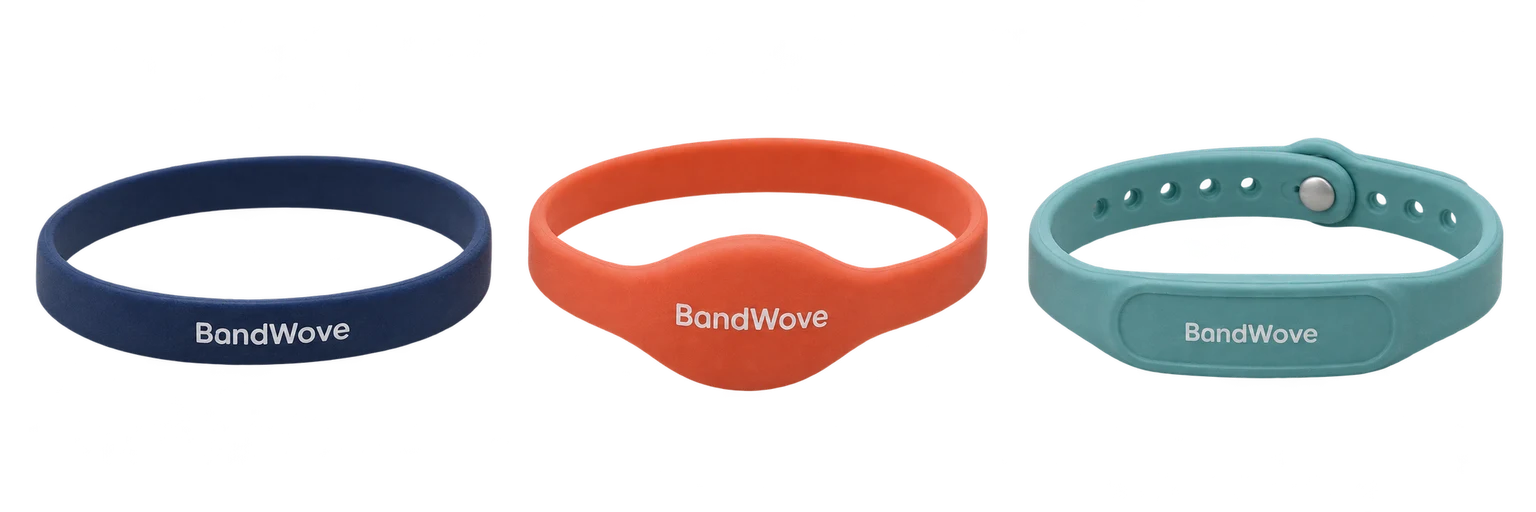
For pool and spa use, assess the complete finished product. Ask how the chip and antenna are integrated, what cleaning methods are suitable, and whether the wristband has been tested under the conditions expected at the property.
Explore custom silicone RFID wristbands when this construction matches the project requirements.
Fabric RFID wristbands
Fabric wristbands can suit multi-day experiences where printed or woven branding is important. They may be appropriate for resort events, guest programs, or selected access applications, depending on the tag construction and closure.
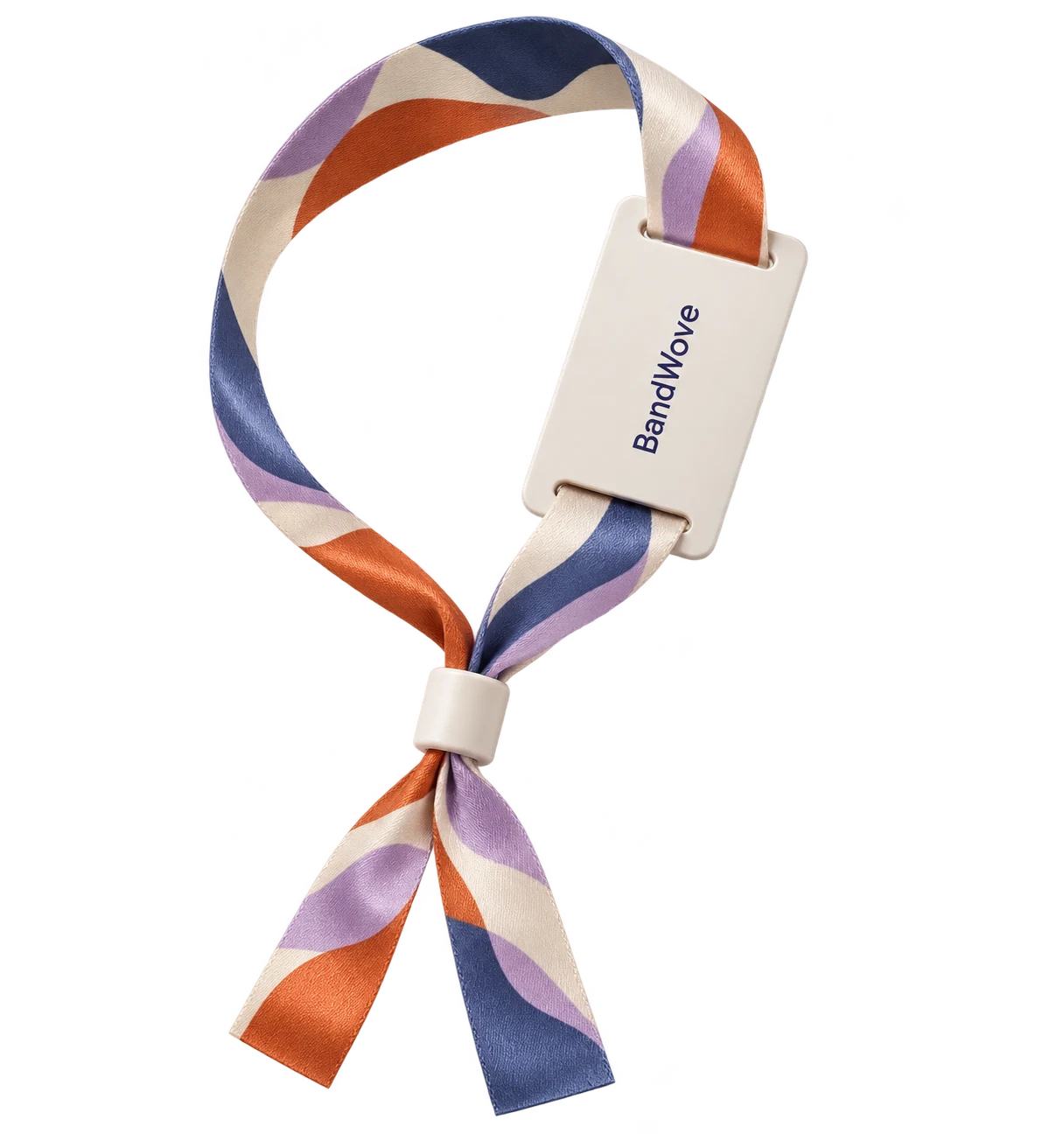
For wet or frequently cleaned environments, check the full assembly rather than assuming that every fabric wristband is suitable for continuous water exposure. See BandWove’s custom fabric RFID wristbands for a product-specific discussion.
Disposable RFID wristbands
Disposable wristbands can be practical for day visitors, temporary access, or situations where the credential is intended for one stay or one event. The closure should make the intended use clear and should fit the venue’s distribution and security process.
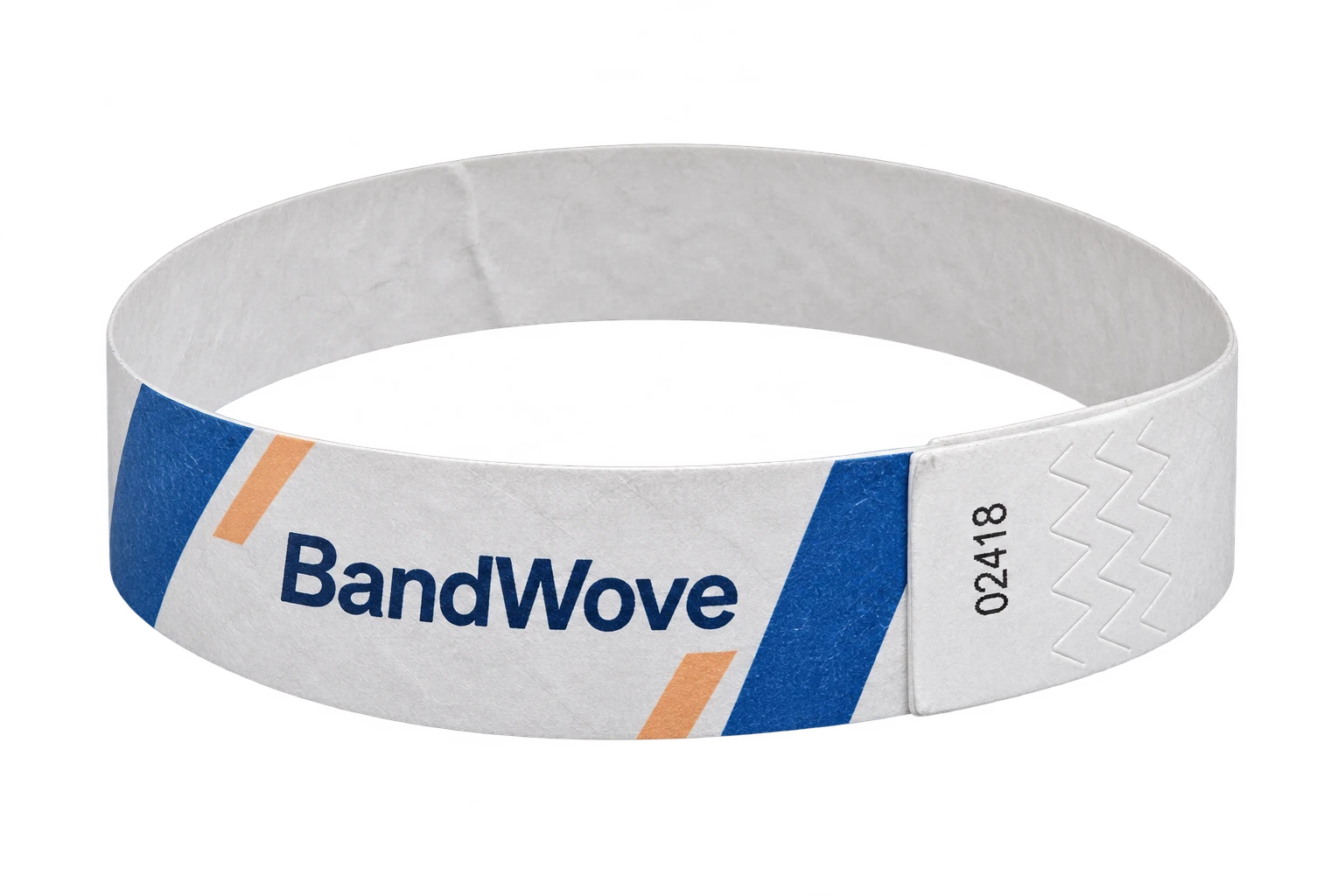
For short-term applications, compare disposable RFID wristbands with reusable constructions based on total operating cost, not unit price alone.
Managing Guest Credentials from Check-in to Check-out
A successful wristband project requires an operating process as well as a product specification.
Issuing credentials at check-in
The hotel should define how each wristband is associated with a guest, room, stay dates, and access permissions. It should also decide how family members, children, room changes, package upgrades, and group bookings are handled.
The wristband may carry an identifier, while the guest profile and permissions remain in the hotel system. Avoid storing unnecessary personal information directly on a tag.
Updating permissions during a stay
Some properties need to change access during a guest’s stay—for example, after a package upgrade or when a room changes. Confirm whether the credential platform supports those updates and how the changes reach each reader or lock.
This is especially important where locks operate offline or synchronize periodically. Do not assume that a credential revocation or permission change will reach every device immediately. The system vendor should explain the update mechanism and expected timing.
Check-out and credential expiration
At check-out, the hotel should expire or revoke the credential according to the access system’s rules. The process should also cover late check-outs, extensions, room moves, and any facilities that remain available after the room is vacated.
For offline locks, confirm how expiration data is enforced and how devices receive updated credentials or schedules.
Lost or damaged wristbands
A lost wristband should trigger a defined replacement process. Staff should verify the guest, issue a replacement credential, and deactivate or otherwise invalidate the old credential wherever the system supports it. The hotel should also record the replacement so that the guest account is not left associated with conflicting credentials.
Cleaning and reissuing reusable wristbands
If wristbands are collected and reused, define a repeatable process for inspection, cleaning, reading, and re-encoding. Confirm that the cleaning method is suitable for the complete product and that the credential can be securely reset or replaced.
A practical reissue process includes:
- Collecting the wristband after use
- Inspecting the band, closure, chip area, and antenna
- Cleaning it according to the approved procedure
- Testing that the chip can still be read
- Removing or replacing the previous credential association
- Issuing the new guest credential
- Recording the wristband as ready for use
What to Test Before Placing a Bulk Order
Before approving production, test finished wristband samples with the actual readers and software that will be used at the property.
Use this checklist with the hotel’s IT team or system integrator:
| Test | What to verify |
|---|---|
| Reader compatibility | The intended readers detect the wristband consistently |
| Credential configuration | The tag format and issued credential match system requirements |
| Room access | The wristband works with the intended lock model and permission rules |
| Multi-system use | Each required gate, locker, or terminal accepts the credential |
| Permission changes | Updates and revocations follow the expected system process |
| Water and cleaning exposure | The finished product withstands the property’s actual use conditions |
| Fit and comfort | The selected size and closure suit the intended guest group |
| Repeated use | The wristband remains readable and structurally sound after the planned use cycle |
| Replacement process | Lost or damaged credentials can be handled without leaving old access active |
Frequently Asked Questions
Can an RFID wristband replace a hotel room key card?
It can when the wristband and its credential configuration are compatible with the hotel’s door-lock system. Confirm the lock model, supported technology, issuing software, and security requirements before ordering.
Can one RFID wristband open a room door and a pool gate?
Potentially, if both systems are configured to accept the same credential or are integrated through a shared platform.
Can hotel RFID wristbands support cashless payments?
A wristband can identify a guest account at a compatible POS terminal. The POS and hotel account platform handle the transaction, balance, and payment workflow; the wristband itself is not a payment processor.
Are silicone RFID wristbands waterproof?
Do not assume that every silicone wristband is waterproof. Performance depends on the complete construction, chip encapsulation, antenna, closure, and test conditions. Ask for product-specific evidence relevant to the intended environment.
Can hotel RFID wristbands be reused?
Some constructions may be suitable for repeated use, but the hotel needs a defined inspection, cleaning, read-test, and credential reissue process. Confirm the expected service life with finished-product testing.
What should a hotel provide when requesting a quote?
Share the intended applications, estimated quantity, preferred material, lock or reader models, chip or credential requirements, encoding needs, and whether the wristbands must be reusable. If multiple systems are involved, provide the device list and ask the integrator to confirm compatibility.
What should staff check when a hotel wristband is lost?
Revoke its rights in each relevant system and verify the replacement at the actual doors or terminals. Offline locks may receive changes differently.
Do wristband colors automatically change room or meal-plan rights?
No. Printed tiers support visual checks. Room, dining and charging permissions must be assigned or changed through the property’s relevant systems.
Does reading a hotel wristband reveal a guest’s booking details?
A tag read does not by itself expose the hotel’s booking system. The available data depends on the credential and authorized application.
Can a guest wristband also open a hotel information page?
A suitable NFC configuration can open a menu or guest-information link on supported phones. Keep that content flow distinct from room-key provisioning.
Technical References
Plan Your Hotel RFID Wristband Project
Choosing an RFID wristband for a hotel or resort is a system decision as much as a product decision. Room access depends on the lock and credential format; pool and spa access depend on the relevant readers; guest-account functions depend on POS and hotel software integration.
When discussing a hotel project, prepare the following information:
- Property type and intended use areas
- Estimated order quantity
- Existing lock, reader, or access-control system
- Required chip or credential format, if specified
- Preferred material, size, color, and branding
- Whether credentials need to be pre-encoded
- Whether wristbands are intended for single use or repeated use
For a more structured specification, use the RFID wristband project brief and contact BandWove about a custom wristband quote.