

Pool wristbands by pass type
Start with the people your community actually admits. The pool office needs to know whether a season pass belongs to a person or is shared by a household under the association’s rules. The attendant needs to see who can enter today. These two decisions tell you how many bands to issue, whether each band needs a number and how to handle a replacement.
| Pass type | Wristband format | What staff check |
|---|---|---|
| Resident or club member | Reusable silicone in sizes that suit the approved wearer groups | Current season marking and a number tied to the resident or membership record |
| Day guest | Single-use vinyl with a snap, or a printed adhesive band suited to the visit | Visit date and any host or guest allowance required by the pool rules |
| Swim team or reserved session | A distinct printed label for the activity or time window | Session roster and the areas covered by the booking |
| Temporary replacement | A separately marked pass with its own expiry | The active resident record and the status of the missing or damaged pass |
In a published member newsletter, the River Oak Swim & Racquet Club described numbered silicone bands for members and separate single-use passes for one-day guests. A pool with an electronic entrance can make the same distinction in its records. At a staffed gate, print and an issue list can do the job.

Closure and material for each pass
Reusable silicone is a practical format for people returning all season. A molded closed loop slips over the hand, so fit depends on hand clearance and comfort on the wrist. Approve a size sample before splitting an order into sizes. Use a high-contrast season marking large enough to read across the admissions desk. A unique printed or engraved number lets staff look up the issued pass.
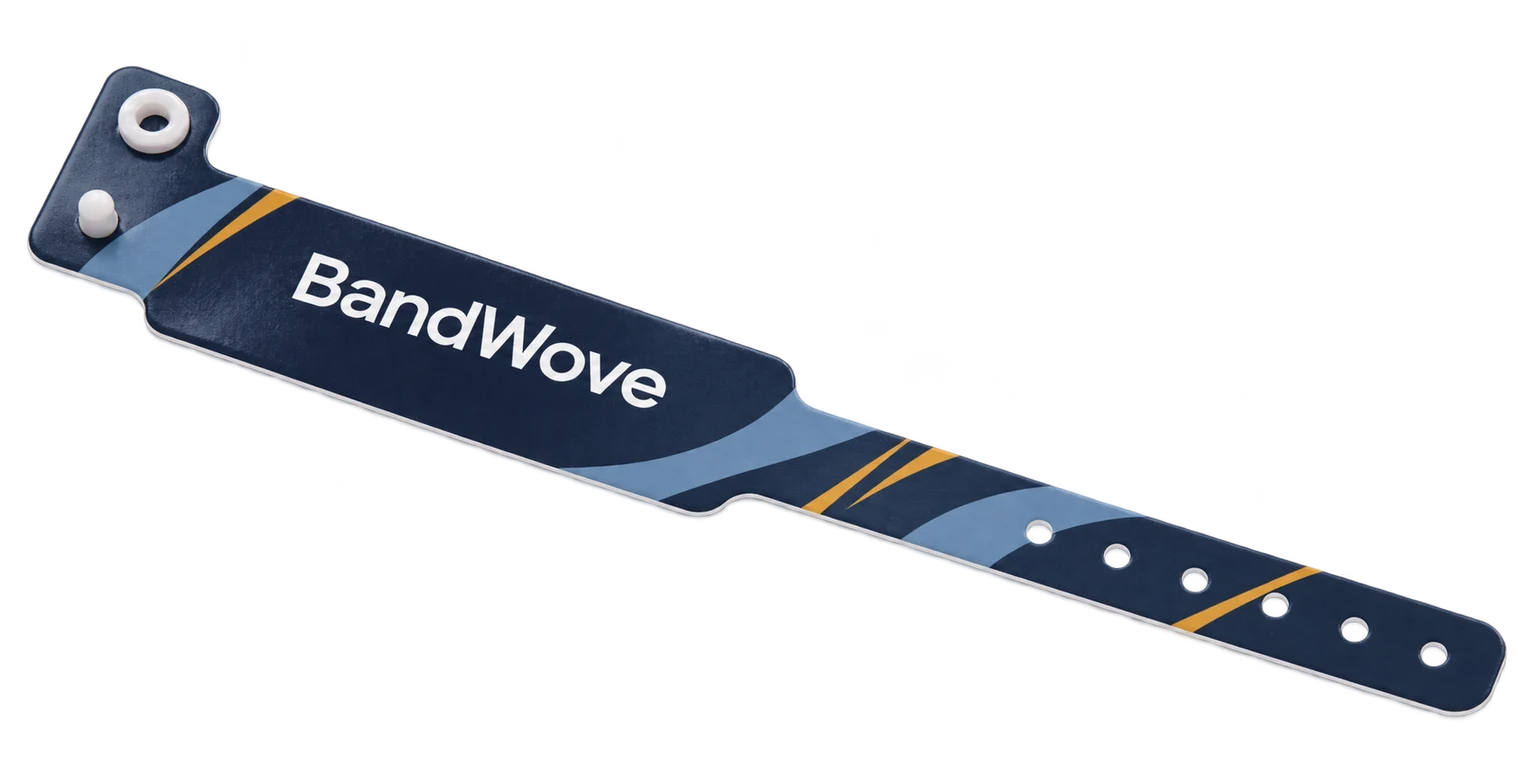
Vinyl with a single-use snap suits a guest band that stays on for the visit. Adjustment holes let an attendant fit it at the gate. The printable area can carry the guest category or visit code. For swimming, review the finished band after the type of exposure it will see. That includes the print, closure and, if the band carries RFID, the protection of its inlay.
Adhesive bands in Tyvek or polypropylene synthetic paper can suit short admissions and staffed guest checks. Tyvek has a fibrous texture and polypropylene synthetic paper has a smoother print surface. The closure uses an adhesive overlap. A folded or covered date is hard to check, so the date and any code belong outside that overlap. If the band will be worn in the pool, use a sample of the same printed material and closure you plan to order. The guide to wet use explains how to evaluate exposure when there is also an RFID component.
Color, season markings and serial numbers
Assign color according to what an attendant needs to recognize first. A resident band can carry a season and the word MEMBER. A guest band can carry GUEST and the date or visit code. Text and color together help when bands look similar in shade or under different light. If the same color is used each Saturday, the date or visit code tells staff which Saturday the pass covers.
Use a unique serial on bands that can be looked up or reissued. Write down the printed number as it appears, including leading zeros, and agree on its location before approving artwork. For example, a serial can sit opposite the logo on a reusable loop. Check that the full number is visible after the guest closes a snap or adhesive band. A printed serial is the number the attendant sees. If the band also uses RFID, the pool’s credential file can associate the chip identifier with that visible number.
Issuing passes and handling replacements
A small issue register is enough for many staffed pools. A row can hold the pass type, the membership or household reference, the printed serial, the issue date, the expiry and the current status. Keep the register with the pool office. The wristband itself needs only the information required at the gate.
- Before opening day. Record who is eligible to collect a band and whether a pass follows an individual or a household. Publish pickup hours, guest conditions and the replacement procedure through the association’s usual channels.
- At guest check-in. Check the host’s access and any guest allowance. Issue the day band for the visit and record it against the booking when the pool uses a register.
- When a band is lost. Locate the resident’s record and mark the original serial inactive. Issue a new number against the same record. If the entrance is electronic, use the access system’s deactivation process and check that the replacement works there.
- At the end of a season. Close the old pass group according to the pool’s policy. For collected reusable bands, inspect the print and closure, clean the band and clear the previous assignment before reissuing it.
Where the entry is checked by sight, staff need the inactive serial information at the gate. Where the gate is electronic, staff need to know when the change reaches the reader. For temporary passes, keep the expiry in the same record so the desk can see when the resident needs a permanent replacement.
A worked order for one swimming season
Suppose a club issues one reusable band to each enrolled member. It has 340 approved enrollments before opening, expects 30 more during the season and sets aside 15 for replacements. That gives an example order of 385 season bands. The 15 replacement pieces need to fit the population that uses the pool, so include them in the size split.
The same club expects 90 day-guest admissions on opening weekend, 35 on each of 12 later weekends and 60 at a separate club event. Its guest estimate is 570 day bands when each visit uses one band. Add only the guest events and days counted in your actual plan. If bands are distributed in advance, count those against the order when issued and track how many remain at the desk.
| Order line | Example quantity | Information to provide |
|---|---|---|
| Resident reusable bands | 385 | Sizes, color, season marking and serial range |
| Guest single-use bands | 570 | Closure, visit or date marking and any color rotation |
Use the venue’s attendance and issue records when available. A household guest limit tells staff what a host can use. The number of guest visits on your schedule is the better basis for a one-band-per-visit estimate.
When a community pool needs RFID
RFID makes sense when a reader already controls the entrance or records visits for the pool’s software. Provide the installed reader model, the current credential type and the method the system uses to issue new passes. Test the configured sample at the actual gate. A season band worn after a swim should read from the angle a visitor can comfortably reach. Try an active pass, an old pass and a replacement through the same reader.
If the desk handles guests during staffed hours, an individual guest check can coexist with RFID member entry. The association still decides how guests get through any controlled door. A water park with multiple entry, locker and purchase readers needs a broader device plan. See water park wristbands and RFID checkpoints for that setup.
Frequently asked questions
What wristband works well for residents who swim all season?
A reusable silicone loop suits residents who take the band home and wear it again. Choose sizes that pass comfortably over the hand. For frequent swimming, evaluate the finished band, markings and any enclosed electronics with the pool’s water and cleaning routine.
Should guest passes show the date or use a different color?
Use both when the attendant needs to tell guest visits apart by day. Color helps the team recognize guests quickly. A clear date or visit code gives staff a more precise check when similar colors return later.
Can a pool keep its resident bands for the next season?
Yes, if the program can renew or reassign the issued pass. Use an enrollment record or a current season marking the attendant can check. In an RFID program, renew the permission through the access system and verify it at the reader.
What should a pool send for a wristband quote?
Send the number of resident and guest bands, the size breakdown, the closure, the desired artwork and numbering, and the intended arrival date. Include the reader and credential details if the bands need to work at an electronic gate.
Does every pool pass need an RFID chip?
No. Staff can check a printed pass visually. RFID is useful when an existing gate or account system needs an electronic credential.
Does a resident wristband prove the person is entitled to enter?
It marks a pass, not the wearer’s identity. Use the pool’s enrollment and guest policy where personal eligibility needs checking.
Can one family booking have several wristbands?
Yes. Issue a pass per wearer where rights are individual, and link the credentials to the family record when the platform supports it.
What happens if a swimmer loses an RFID pool pass?
Verify the resident or guest record, cancel the lost credential and issue a replacement under the pool’s policy. Check the replacement at the gate.
Can printed guest bands and reusable resident bands use one reader?
Yes, if both contain credentials supported by that reader. Assign their different validity periods through the access system.
What should we test before choosing pool wristband sizes?
Try the fitted band on the intended wearer groups. Check hand clearance for closed loops and readable pass markings after fitting.
Sources
References checked November 21, 2026.