
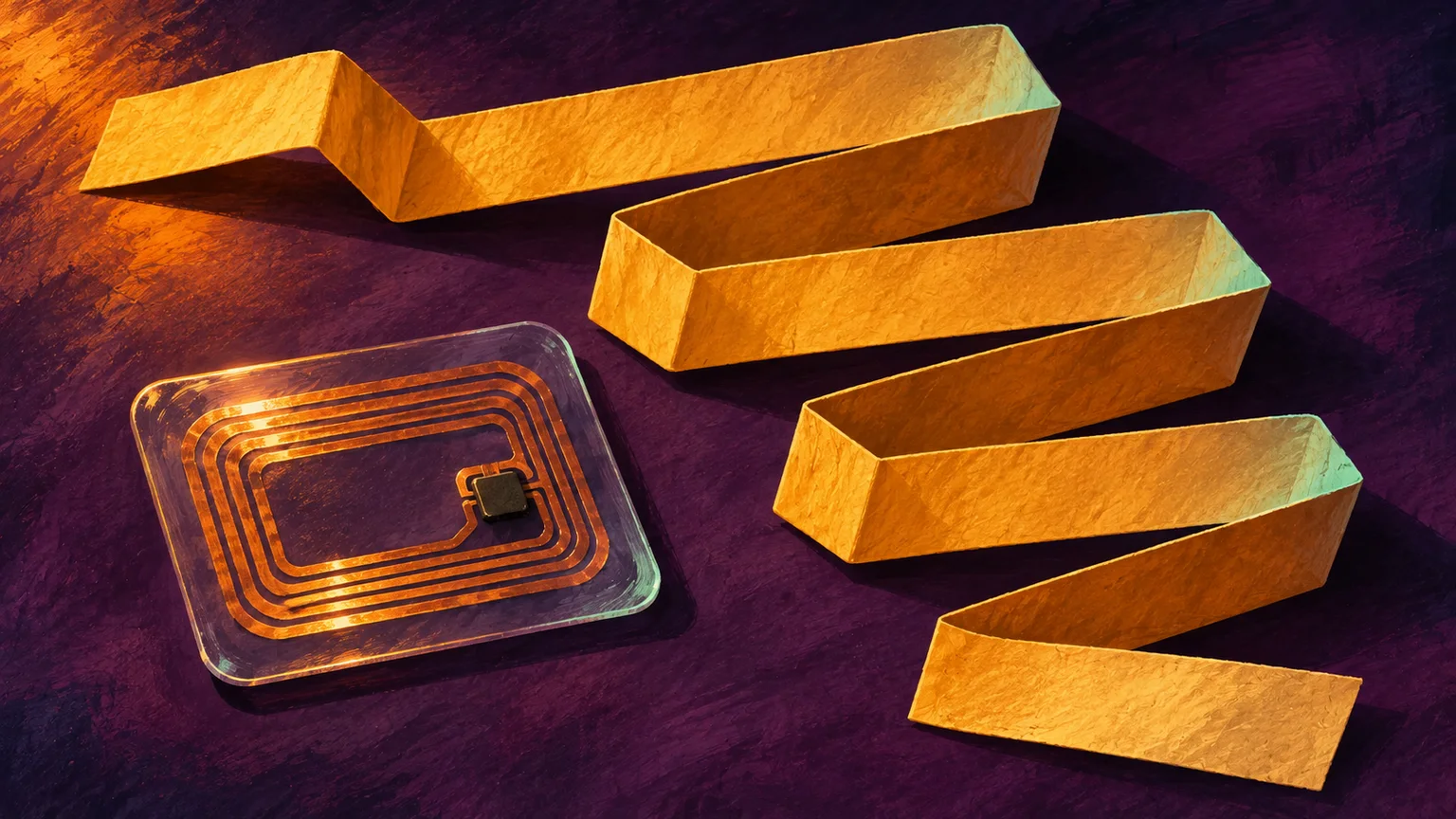
What takes up the 144 bytes?
NDEF is a standard way for NFC tags to store a link, text or other data. For a website address, the tag holds a URI record and fields that identify the record and its length. A factory-layout NTAG213 also uses five bytes for a Lock Control TLV. TLV stands for type, length and value. The fields help the reader tell different pieces of data apart. NXP NTAG21x data sheet, sections 8.5.4 to 8.5.6
A URI record can replace a common prefix with a one-byte code. For example, Android’s URI record implementation can store the prefix represented by the code 0x04, followed by the remaining address bytes. Choose the URL or URI item in your writing app so the phone sees a link. Read the tag back after writing and check that it opens the intended page. Android NdefRecord API · Android URI prefix table
How much space does a link with tracking parameters use?
These examples keep the five-byte Lock Control TLV and reserve a one-byte terminator. They use a single short NDEF URI record, without a record ID, and one byte to represent the HTTPS prefix. The count reserves 13 bytes besides the domain, path and query string.
| Field | Bytes |
|---|---|
| Factory Lock Control TLV | 5 |
| NDEF TLV type and length | 2 |
| Short NDEF record header, type length, payload length and URI record type | 4 |
| URI prefix code | 1 |
| Terminator allowance | 1 |
| Total | 13 |
| Example | Bytes after prefix compression | Estimated space used | Fits this layout? |
|---|---|---|---|
https://example.com/a |
13 | 26 | Yes |
Same address with ?ref= and 110 ASCII characters |
128 | 141 | Yes |
Same address with ?ref= and 120 ASCII characters |
138 | 151 | No |
https://example.com/%E7%A4%BA%E4%BE%8B |
30 | 43 | Yes |
In the final row, two Chinese characters have been percent-encoded into 18 ASCII bytes. The domain and slash take another 12 bytes. Your writing tool may normalize the address you paste. If its reported size differs from your estimate, check the final record, including how it handles that path. In the example layout the domain, path and query have room for 131 bytes. A different record layout can change that number.
How much more room do NTAG215 and NTAG216 have?
NTAG215 lists 504 user bytes and factory-declares 496 bytes for NDEF storage. NTAG216 lists 888 user bytes and declares 872 bytes for NDEF. Leave space for the record and storage fields on both. If the payload grows beyond the short-record form, a longer length field takes more bytes. Give your encoder the shortest, longest and any non-ASCII sample addresses. Ask for the serialized message sizes and a write-and-read check. NXP NTAG21x data sheet, section 8.5.4
Four things to try when writing fails
- Check the app’s list of records. Leave just the URL you want to test. An old contact record, text entry or automation record can still be in the queue.
- Try a short address. Keep the same phone, app and writable sample. If the short one writes but the long one reports insufficient memory, calculate the larger record. If both fail, check whether the tag can still be written and whether you are holding it over the phone’s antenna.
- Look at the URL in the writing app. Select a URI record and check for added records or escaped characters. If the app does not show byte size, write to a blank sample, read it back, and open the result.
- Shorten the link or choose more memory. If you control the domain, you can use a short entry address and redirect visitors to the full page. If the tag needs to store a long URL or several records, choose NTAG215 or NTAG216 based on the complete message and test the finished label on its intended surface.
For bulk encoding, record the app, the largest record and the page opened after reading it back. A change to campaign parameters or to the writing tool gives you a clear reason to rerun that test. BandWove RFID chip selection guide
Frequently asked questions
Can NTAG213 store a 144-character URL?
Its 144-byte figure describes user memory. The space for your URL depends on prefix compression, escaping, and record and tag overhead. With the single-record layout used here, the domain, path and query can use up to 131 bytes after the prefix is compressed. NXP NTAG21x data sheet
Can a short link still send visitors to a page with tracking parameters?
Yes. Store the short address on the tag and configure your website to redirect to the full URL. Scan a finished sample and check the final page and its query parameters before encoding the batch.
Will switching to NTAG215 fix a write error?
It will help when the current tag is out of space and the encoded message fits NTAG215. If even a short URL fails on the original tag, check the write lock, phone position and app before ordering more memory.
Are URL characters and encoded bytes the same measurement?
No. Escaping and character encoding can change the byte count. Measure the serialized NDEF message produced by the writing tool.
Does the HTTPS prefix always occupy its full text length?
An NDEF URI record can represent a recognized prefix with a code. The result depends on how the writing tool creates the record.
Can extra NDEF records stop an otherwise short link fitting?
Yes. Text, contact or other queued records consume space too. Check the complete record list before testing a URL-only write.
Why can a non-English URL path use more memory?
Non-ASCII text or percent-encoded characters can require several bytes. Count the final encoded address rather than its visible character length.
Does locking the tag increase its storage capacity?
No. Lock settings control write access. They do not add memory, and permanent locking can prevent later changes.
Should I test the longest URL before a bulk encoding job?
Yes. Include the longest address, query parameters and non-ASCII examples. Read the finished samples back and check the destinations.
Does a larger NTAG chip remove all NDEF overhead?
No. Larger chips still need record and storage fields. Choose capacity from the complete encoded message, not the URL length alone.