
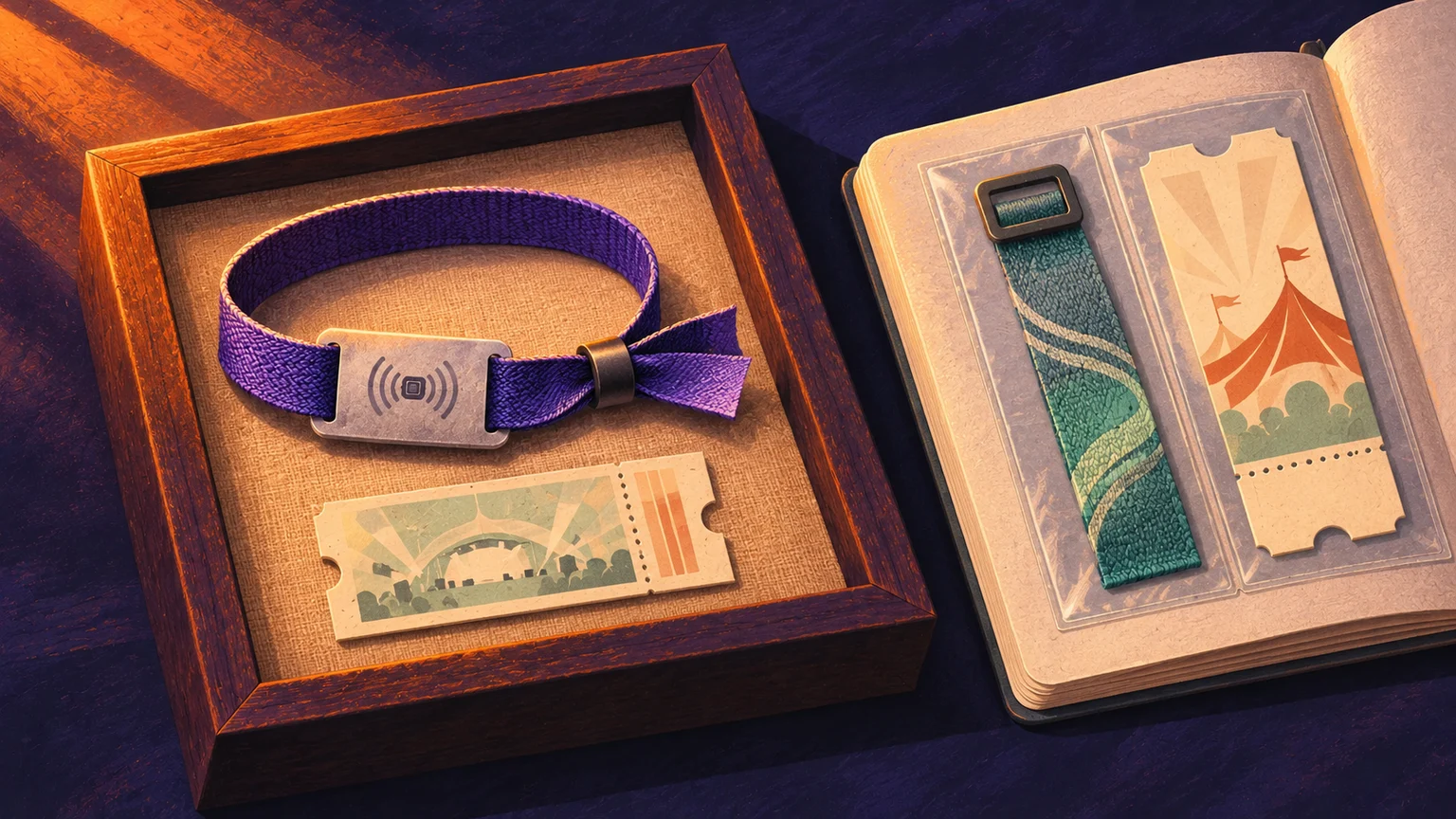
Which display suits the wristband you kept?
| What you have | A good place for it | What to check first |
|---|---|---|
| A cut fabric band that lies flat | A ticket album or a shallow frame with a spacer | Can you read the full event name? If the clasp is still attached, make sure it won’t dent the next page. |
| A closed loop with its original locking bead | A shadow box deep enough to keep the loop intact | Set the band in a loose oval and turn the bead to one side. See how much of the artwork faces forward. |
| A fabric band with a rigid RFID tag | A display frame with clearance for both the tag and the clasp | Tilt the tag until the artwork is easy to read, then measure the height of the entire arrangement. |
| A thin, paper-like admission band | An individual clear sleeve in a ticket album | Show the date or serial number. Keep any exposed adhesive away from the ticket or photograph on the same page. |
How to frame one wristband with a ticket and a photo
Start with a sheet of paper cut to the size of the frame backing. Try the layout there first. A stage photo can fill the upper half, with the band running below it and a ticket stub turned to show the date. If the festival name already appears twice, leave the last bit of space for something only you would remember. The song you heard as the rain started might mean more in five years than a third copy of the logo.
When you’re happy with the layout, place the band on the actual backing and stand a ruler beside the clasp or RFID tag. Say the highest point sits 8 mm above the backing. A frame with exactly 8 mm between the backing and the glazing would touch it when closed. When shopping, ask for the usable depth with the backing installed. The outside thickness of the frame tells you very little about that gap. The Canadian Conservation Institute also recommends spacing glazing away from mounted textiles.
For a sturdy woven band, cover the backing with clean, colorfast cloth. Position the wristband and lay a few loose loops of thread across the edges, stitching the ends into the backing cloth. Place the loops between letters or alongside a stripe so they’re hard to see. Tip the backing upright before you close the frame. If the band slides, adjust the supports while you can still reach them. You can snip the support thread later when you want to rearrange the collection. Keep a brittle or splitting band flat rather than trying to stitch it in place. The Canadian Conservation Institute’s Note 13/6 covers mounting small, flat textiles.
How to display a collection that keeps growing
If you go to the same festival every summer, try one row per year. Line up the event names so you can see when the lettering changed, which year had the orange band and when you first bought a weekend pass. If you travel to different shows, try one album page per city instead. Leave space to write down the venue and who came with you. That gives you a way to find “the show I went to with Sam” even if you’ve forgotten the year.
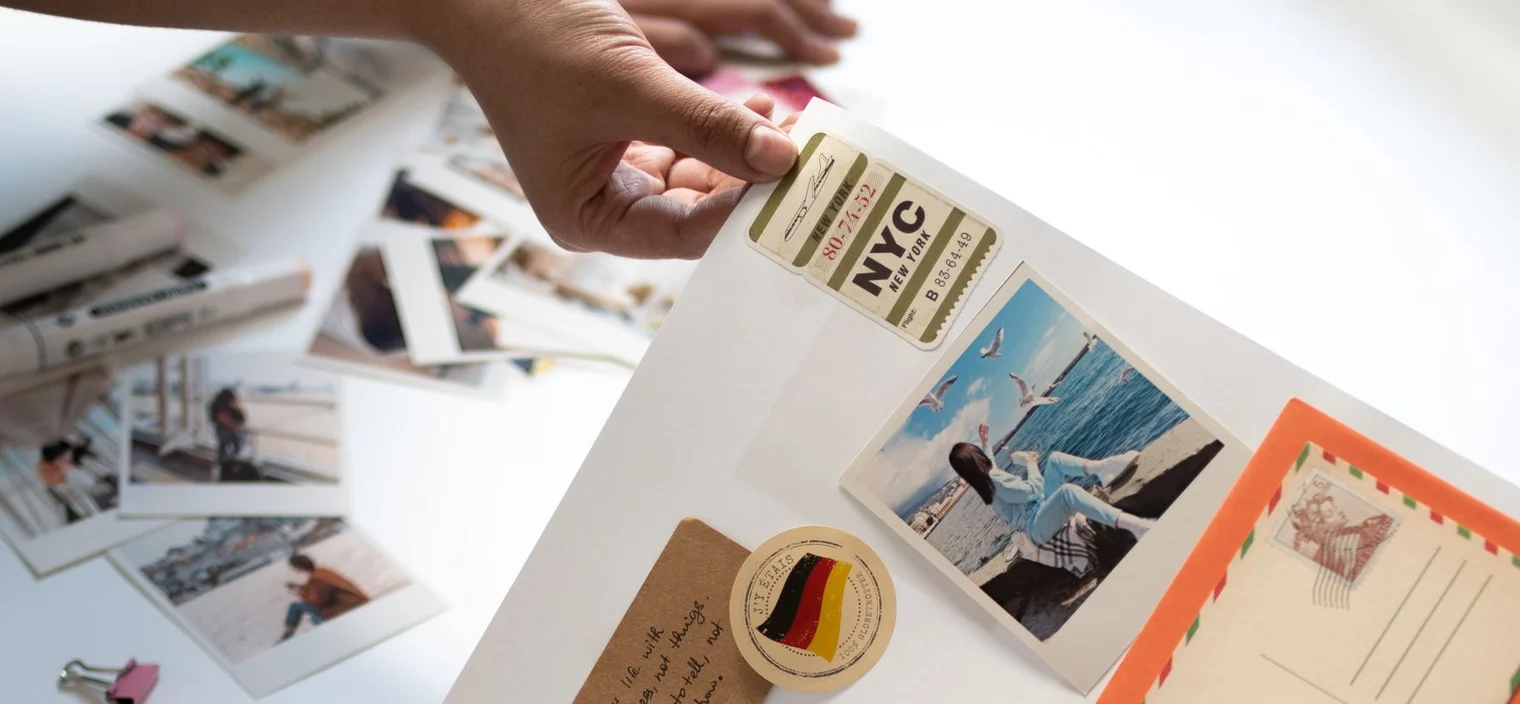
You can also rotate a few favorites through one frame and keep the rest in an album. When another band comes home, it gets a page without forcing you to take the whole display apart. If the printing on an older band has begun to fade, photograph both sides while you can still read them and put the event, city and year on a separate label. For a wall display, choose a spot out of direct sunlight.
Designing a festival wristband people will keep
If you’re ordering bands for a festival, try one extra check at the sample stage. Photograph a sample on someone’s wrist. Then slip a spare into the position a fan might choose for a frame and photograph it again. A badge can look great when worn, yet cover the year when the strap lies flat. On the other hand, a sponsor name on the tail may be the only lettering visible when the band forms a loop. Both are easy to spot while there’s still time to move the artwork. Fabric wristband artwork guidelines · Woven and printed wristbands compared
For an annual event, give the year a spot of its own. This summer’s colors are easy to recognize now. Five years from now, with three similar bands lined up on a shelf, those four digits may be what tells someone, “That was the year I went.”